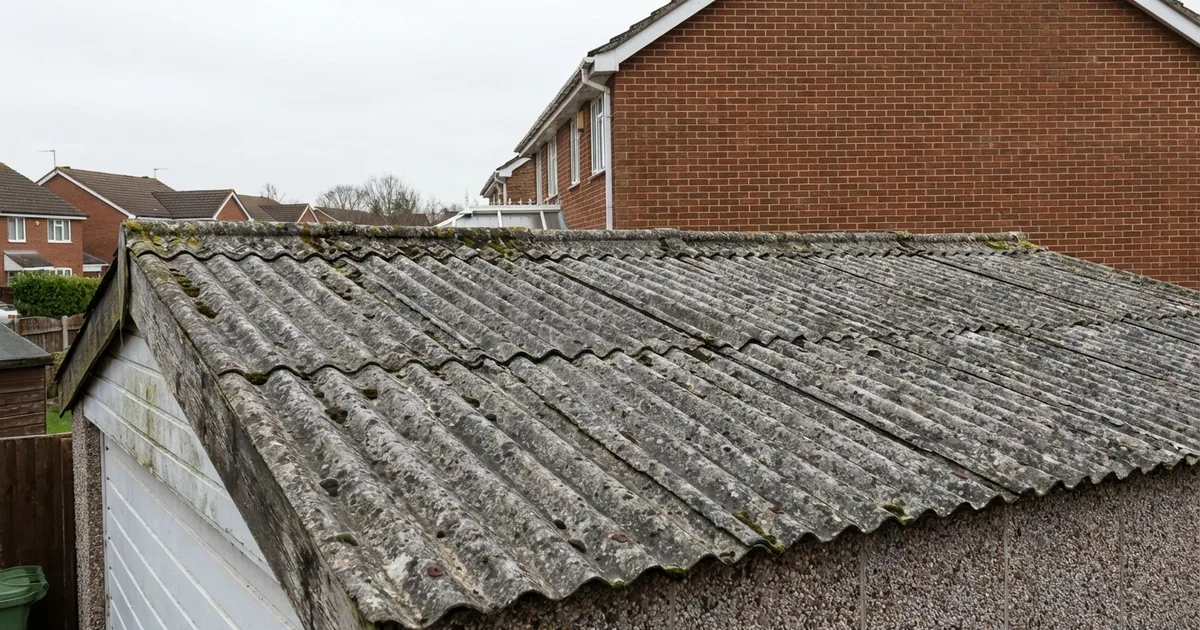
Asbestos removal in the UK costs anywhere from £400 to remove a garden shed to £20,000+ for a commercial AIB project. That gap isn’t random. What you’re paying for is the type of material, the regulatory burden it carries, and whether the contractor removing it holds the HSE licence required by law.
The single biggest factor is material type. Asbestos cement (garage roofs, sheds) falls under non-licensable work and costs a fraction of what you’ll pay for asbestos insulating board or pipe lagging, both of which legally require an HSE-licensed contractor under the Control of Asbestos Regulations 2012 (CAR 2012). Using an unlicensed contractor for licensable work is a criminal offence, and it can void your building insurance.
Below, you’ll find material-by-material prices, the survey costs that come before removal, grants most homeowners don’t know about, and how to verify any contractor’s HSE licence in two minutes. All figures are from 2025–2026 UK market data.
How Much Does Asbestos Removal Cost? Quick-Reference Price Table
The average cost of asbestos removal in the UK is around £1,600, but that average hides enormous variation by material type. The table below covers the most common residential and light-commercial jobs. Jobs marked with an asterisk (*) are licensable work and legally require an HSE-licensed contractor.
| Job Type | Cost Range | Notes |
|---|---|---|
| Garage roof (single) | £600–£1,500 | Asbestos cement; non-licensable in most cases |
| Garage roof (double) | £1,200–£2,500+ | Asbestos cement; replacement roof additional (£1,000–£2,000) |
| Artex ceiling (per room) | £1,500–£3,000 | £50–£60/m² removal; £30/m² encapsulation |
| AIB panels * | £200–£300/m² | Licensable; 100m² project = ~£20,000 |
| Pipe lagging * | £150–£250/linear metre | Licensable; plant rooms, boiler spaces |
| Boiler (lagging + flue) | £300–£3,000+ | Lagging licensable (per-metre rate); cement flue non-licensable |
| Vinyl floor tiles | £35–£80/m² | 40m² room = £1,500–£2,200 |
| Soffits (cement) | £600–£1,500 | Similar to garage roof; non-licensable |
| Soffits (AIB) * | £200–£300/m² | Licensable; 30m = £6,000–£8,000 |
| Shed | £400–£600 | Whole demolition and removal |
| Water tank | £150–£300 | Often bundled with other works |
| Management survey | £200–£600 | Required before removal; identifies ACMs |
| R&D survey | £300–£1,000+ | Full intrusive survey before renovation/demolition |
Sources: myjobquote.co.uk, oracleasbestos.com, tradesmencosts.co.uk, nationalasbestosremovalcentre.co.uk. All prices are UK market averages for 2025–2026. Regional premiums apply, particularly in London and the South East.
These are averages. Your specific quote will depend on seven variables. Here’s what drives the price up or down.
What Affects Asbestos Removal Cost
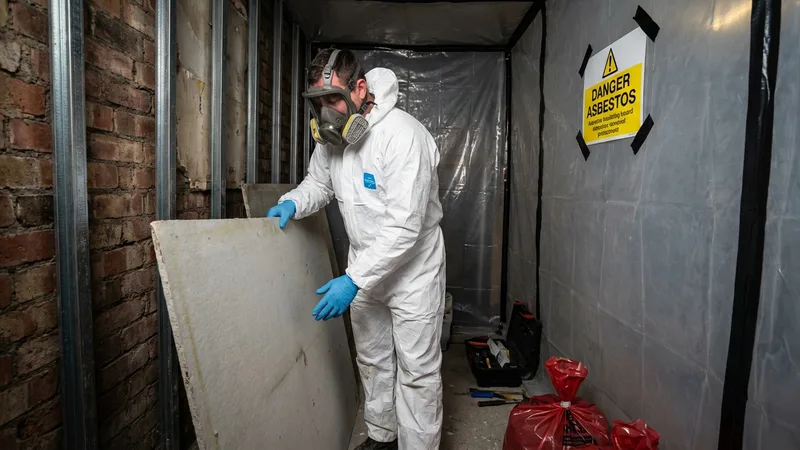
Material type is the biggest factor by far. AIB and pipe lagging cost 3–5x more per square metre than asbestos cement because they are classified as licensable work. The licensing requirement brings mandatory air monitoring, negative-pressure enclosures, 14-day HSE notification, and specialist waste disposal. All of that is reflected in the quote.
Condition matters significantly. Friable or damaged asbestos requires more elaborate containment and decontamination measures than intact material. A clean asbestos cement garage roof in good condition is a straightforward job. The same material crumbling and shedding fibres requires a different level of control.
Volume works in your favour on larger jobs. Every contractor has fixed mobilisation costs: travel, site setup, decontamination unit hire. Those costs get spread across a bigger project, so the per-square-metre rate drops on larger jobs.
The four remaining factors are easier to quantify:
| Factor | Impact on Price | Detail |
|---|---|---|
| Access difficulty | +25–50% | Confined spaces, work at height, removal in occupied buildings |
| Location | +20–40% (London/SE) | Contractors in Kent and the Home Counties quote higher than those in West Yorkshire or the North East |
| Clearance testing | £200–£400 per job | Mandatory after licensable removal; some contractors include it, others list separately |
| Scaffolding | £15–£25/m²/week | Needed for two-storey soffits; rarely needed for a single-storey garage roof |
Check whether clearance testing and scaffolding are included before you compare quotes. A £2,000 quote with testing included can be cheaper than a £1,800 quote where testing is a separate £400 line item.
Asbestos Removal Cost by Material Type
Now that you know what drives the price, here are the specific costs for each material type you’re likely to encounter.
Asbestos Garage Roof Removal Cost
This is the most common residential asbestos job in the UK. Asbestos cement sheets were used on millions of garage, lean-to, and carport roofs from the 1950s onwards. Removal-only typically costs £600–£1,500 for a single garage (around £945 on average) and £1,200–£2,500+ for a double, based on 2026 UK contractor pricing data. For the full price table, process, timescales, and what to check in a quote, see our dedicated asbestos garage roof removal guide.
Asbestos cement is non-licensable in most cases, which keeps costs lower. Contractors still need to follow safe working methods: wetting the sheets, lowering them carefully (never dropping or breaking them), double-bagging the waste, and disposing of it through a licensed hazardous waste carrier.
One cost that catches people out: the replacement roof. Removing the old asbestos sheets leaves you with a bare frame. A new steel or felt roof typically adds £1,000–£2,000 on top of the removal price, so budget for both. This is the single most common reason homeowners find their final bill is higher than the removal quote suggested.
Artex Asbestos Removal Cost
Artex and other textured coatings applied before 1985 may contain chrysotile (white asbestos) — our guide to whether Artex contains asbestos covers how to tell by age and appearance. Testing is essential before anyone touches it. A typical room costs £1,500–£3,000 to have the Artex removed, working out at £50–£60/m² (myjobquote.co.uk, oracleasbestos.com).
Encapsulation is a legitimate cheaper alternative here. Skim plastering directly over the Artex seals the asbestos in place at around £30/m². For a ceiling in good condition that isn’t going to be sanded, drilled, or disturbed, this is often the right call. It costs roughly half what removal does and creates no fibre exposure risk.
Asbestos Ceiling Removal Cost
“Asbestos ceiling” covers two very different jobs, and the price gap between them is enormous. If your ceiling is a textured coating (Artex or similar) on plasterboard, you’re looking at the Artex figures above: £1,500–£3,000 for a typical room, or roughly £50–£60/m² — non-licensed work that many contractors can quote quickly. If your ceiling is made of asbestos insulating board panels or AIB ceiling tiles — common in kitchens, hallways, and garages built or refitted between the 1950s and 1980s — it is licensable work at £200–£300/m², and only an HSE-licensed contractor can legally touch it.
The catch: you often can’t tell which one you have by looking up at it. A painted AIB ceiling tile and a painted plasterboard tile look near-identical from below. That identification is exactly what a survey or a bulk sample test settles before anyone quotes you, and it’s why ceiling quotes given sight-unseen over the phone are worthless. For ceilings in good condition, encapsulation (around £30/m²) is frequently the more sensible option — see the removal-vs-encapsulation section below. For a deeper dive on identifying ceiling tiles specifically, see our guide to asbestos ceiling tiles.
Asbestos Insulating Board (AIB) Removal Cost
This is where the price jumps. AIB is licensable work, and the per-square-metre cost reflects that: £200–£300/m² (nationalasbestosremovalcentre.co.uk, oracleasbestos.com). A 100m² AIB project runs to approximately £20,000. Even a smaller job, like 30 linear metres of AIB soffits, will cost £6,000–£8,000.
AIB was used for ceiling tiles, soffits, partition walls, fire doors, and window panels in buildings constructed between the 1950s and 1980s — our AIB identification guide covers where to find it and how to tell it from plasterboard. It’s more friable than asbestos cement, meaning it releases fibres more easily when disturbed. That higher risk classification is exactly why only HSE-licensed contractors can remove it, and why the regulatory overhead (enclosures, air monitoring, clearance testing, specialist disposal) pushes the cost to 4–5x what you’d pay for a garage roof.
Soffits and Roof Sheets
Soffits cause confusion because the price depends entirely on what they’re made of. Asbestos cement soffits are non-licensable and cost roughly the same as a garage roof removal: £600–£1,500 for a typical strip. AIB soffits are licensable and cost £200–£300/m², the same rate as AIB panels. A two-storey property with 30 metres of AIB soffits will pay £6,000–£8,000 before scaffolding. If you don’t know which type you have, a surveyor can confirm with a sample test for around £30. Cement roof tiles and slates on the house itself are a different job again — identification and removal pricing are covered in our asbestos roof tiles guide.
Pipe Lagging Asbestos Removal Cost
Pipe lagging is licensable work, typically found in plant rooms, roof spaces, basements, and around older boilers. Removal costs £150–£250 per linear metre (nationalasbestosremovalcentre.co.uk). The high per-metre rate reflects the complexity: lagging often runs through confined spaces, around bends and junctions, requiring enclosures at every access point and continuous air monitoring throughout.
Asbestos Boiler Removal Cost
Older boilers are priced as two separate problems. The insulation lagging on the boiler body and its pipework is usually amosite or crocidolite — licensable work billed at the pipe-lagging rate of £150–£250 per linear metre, plus enclosure setup around the boiler itself. The flue is typically asbestos cement (chrysotile, white asbestos) and is non-licensable, priced closer to cement soffit work. In practice a domestic boiler with lagged pipework and a cement flue lands anywhere from a few hundred pounds for the flue alone to several thousand where the plant room lagging is extensive. The survey (£200–£600) tells you which side of that line you are on before anyone quotes.
Vinyl Floor Tile Removal Cost
Asbestos vinyl floor tiles cost £35–£80/m² to remove — our asbestos floor tiles guide covers identification and testing. A typical 40m² room runs to £1,500–£2,200 (oracleasbestos.com). Floor tiles are often the best candidate for encapsulation: if the tiles are intact and unbroken, overlaying them with new flooring avoids disturbing the asbestos entirely. This matters because the real hazard with floor tiles is often the black bitumen adhesive underneath, not the tiles themselves. Scraping or grinding that adhesive can push the job into licensable work territory.
Shed and Water Tank Removal Cost
Asbestos cement sheds are the simplest and cheapest removal job: £400–£600 for a full demolition and removal (myjobquote.co.uk). Water tanks run £150–£300 and are usually bundled with other work on the same property (tradesmencosts.co.uk). Both are asbestos cement, so non-licensable in most cases.
Disposal Costs: What Happens to the Waste
Most contractors roll disposal into their quote, but it’s worth knowing what’s involved because this is where unscrupulous operators cut corners. Asbestos waste must be double-bagged in UN-approved asbestos waste sacks, transported by a licensed hazardous waste carrier (a separate licence from the removal licence), and taken to a registered hazardous waste landfill site.
The cost works out at £0.55–£0.80 per kg, or £200–£500 per tonne (tradesmencosts.co.uk, myjobquote.co.uk). If a contractor mentions skip-only disposal with no reference to a hazardous waste manifest, that’s a red flag. Improper disposal is an offence in itself, and it can result in the waste being traced back to your property.
Survey Costs: What You Pay Before Removal Starts
If you suspect asbestos but haven’t confirmed it, you need a management survey. If you’re about to renovate or demolish, you need a refurbishment and demolition (R&D) survey. They cover different ground and cost different amounts.
A management survey locates and assesses asbestos-containing materials in an occupied building. It produces an asbestos register and condition assessment. This is what a homeowner needs first. For a typical 3-bed house, expect to pay £250–£400 (tradesmencosts.co.uk, nationalasbestosremovalcentre.co.uk). Our asbestos survey cost guide breaks down prices by property size and survey type.
A refurbishment and demolition (R&D) survey is fully intrusive. It’s required before any major renovation, extension, or demolition work begins. The surveyor will open up walls, lift floor coverings, and access every void. A residential pre-demolition R&D survey costs £400–£800. Commercial properties pay more: £800–£2,500+ depending on size and complexity.
Some removal contractors offer a combined “survey and removal” package that saves on the second mobilisation. It’s worth asking, especially for straightforward residential jobs. But be cautious of surveys priced below £150 for a whole house. At that price, ask what they’re leaving out. A thorough management survey of a 3-bed property takes a qualified surveyor 2–3 hours on site. If someone is quoting half a day’s work for £100, they’re probably not checking everywhere they should.
Don’t skip the survey to save money. An unlicensed removal without proper identification of the material type is how people end up in serious trouble, both legally and in terms of fibre exposure. The survey cost is small compared to the removal bill, and it ensures the right type of contractor quotes for the right type of work.
Once you have a survey, you may find removal isn’t always necessary, or even the cheapest option.
Removal vs. Encapsulation: When to Choose Each
CAR 2012 does not mandate removal. It mandates management. If asbestos is identified, in good condition, and won’t be disturbed, the legally compliant approach is an asbestos register and annual condition monitoring. Not removal.
| Option | Cost | When appropriate |
|---|---|---|
| Removal | £50–£60/m² | Material is damaged, friable, or will be disturbed by planned works |
| Encapsulation | £30–£33/m² | Material is bonded, in good condition, low disturbance risk |
| Leave in place | £0 (beyond survey/monitoring) | Material is undisturbed, in good condition, not at risk of damage |
The cost difference is significant on large-area jobs. Encapsulating a 50m² ceiling at £30–£33/m² costs £1,500–£1,650. Removing the same area at £50–£60/m² costs £2,500–£3,000. That’s a £1,000+ saving, and in many cases encapsulation is the technically better option too.
Encapsulation comes in two forms: coating (a liquid sealant painted or sprayed onto the surface) and enclosure (boxing the material in with new panels or boarding). Coating is cheaper and works for flat, accessible surfaces. Enclosure is used where the material is in an awkward location or where you want a finished surface on top.
Encapsulation is not always suitable. If the asbestos is already friable or damaged, sealing over it won’t stop fibre release. If the area is about to be renovated (drilling, cutting, demolishing), encapsulation just delays the problem. And if the surface can’t take a coating, for example badly weathered outdoor cement sheets, removal is the only realistic option.
For an intact asbestos cement garage roof that isn’t leaking and won’t be disturbed, leaving it in place with a register entry is often the right decision. It costs nothing beyond the survey, and there’s no fibre exposure to anyone. Removal makes sense when the material is damaged, when you’re renovating, or when the property is being sold and the buyer wants it gone.
Can You Remove Asbestos Yourself?
The question behind many cost searches is really “can I skip the contractor?” The honest answer: sometimes legally, rarely wisely.
For licensable materials — AIB, pipe lagging, sprayed coatings, loose insulation — the answer is a flat no. That work legally requires an HSE-licensed contractor, full stop. For non-licensable asbestos cement (a garage roof, a shed), there is no law that stops a homeowner working on their own domestic property, but the HSE strongly advises against it, and the savings are smaller than they look. Doing it properly still means FFP3 respiratory protection and disposable coveralls (£30–£60), polythene sheeting and UN-approved asbestos waste sacks, wetting the sheets and removing them without breaking them, and then disposal: most council tips only accept double-bagged bonded asbestos from residents by prior booking, some charge, and some don’t accept it at all — in which case a licensed waste carrier collection costs £200–£400 on its own.
Set against a professional quote of £600–£1,500 that includes insurance, safe handling, and a hazardous waste consignment note, DIY on a garage roof typically saves a few hundred pounds in exchange for taking on all of the exposure risk and disposal liability yourself. If the material is damaged or crumbling, don’t touch it at any price — get a licensed professional in.
Grants and Financial Help for Asbestos Removal
There is no national UK grant specifically for residential asbestos removal. That needs to be said upfront, because the search results for “asbestos removal grants” are full of vague promises. However, real financial help does exist if you know where to look.
Local council grants. Many councils offer grants through their Environmental Health departments for health hazards including asbestos. Typical amounts run up to 50% of the project cost, with a maximum grant of £5,000. Means-tested options are available in some areas, ranging from £1,000–£3,000 for low-income households, with full funding in exceptional cases (asbestos-surveys.org.uk). The catch: these grants are rarely advertised and change with annual council budgets. You have to ask directly. Search “[your council name] asbestos removal grant” or phone the Environmental Health department. Budgets are small and first-come, first-served within the council year, so don’t wait.
Land Remediation Relief. For commercial property owners, this is significant. Companies can claim a 150% deduction of qualifying asbestos removal costs against taxable profits (asbestos-sampling.com). If your business spends £10,000 on asbestos removal from a commercial property, you can deduct £15,000 from your taxable profits. Landlords with commercial or investment properties should speak to their accountant about this before paying for removal. Keep itemised invoices for every element of the work, including surveys, disposal, and clearance testing. Your accountant will need them to support the claim.
Disabled Facilities Grant. If asbestos is discovered during adaptations for a disabled occupant, DFG funds may be extended to cover the asbestos removal as part of the adaptation works. This is administered by your local authority’s housing department, not Environmental Health. Contact them early in the adaptation planning process, because DFG applications already take 4–8 weeks to process and adding asbestos removal to the scope requires a separate assessment.
Practical advice: apply early. Council grant budgets reset annually and are typically exhausted well before year-end. Get your survey done, get your quotes, and submit the grant application before committing to a contractor.
Before you request a single quote, there’s one thing you must check. It takes two minutes and could save you from a criminal investigation.
The Licensing Check You Must Do Before Hiring Anyone
Using an unlicensed contractor for licensable asbestos work is a criminal offence under CAR 2012. Not a regulatory technicality. A criminal offence. The consequences for the homeowner are severe and specific.
First, the work itself is illegal. Second, your home or building insurance may not cover any damage or contamination resulting from unlicensed work. Third, if improperly removed asbestos contaminates your property, you bear the ongoing liability and the cost of remediation. Fourth, there’s the obvious health risk: unlicensed contractors may not use proper enclosures, air monitoring, or clearance testing, meaning you and your family could be exposed to airborne fibres.
The 14-day notification rule is your first red flag test. For licensable work, contractors must notify the relevant enforcing authority at least 14 days before starting, using the ASB5 form. If a contractor offers to start a licensable job tomorrow, they are either cutting corners on notification or don’t hold a licence at all. Either way, walk away.
How to verify any contractor in four steps. (1) Ask the contractor for their HSE licence number and licence expiry date. (2) Search the CONIAC register at coniac.org.uk, which lists every HSE-licensed asbestos contractor in the UK, updated weekly. (3) Confirm the licence hasn’t expired and the company name matches. (4) Check the licence type matches the work you need. The HSE’s own register at hse.gov.uk is the authoritative government source. Also ask whether they hold UKATA or BOHS P402 certifications.
Licence types explained. An HSE standard licence covers full asbestos removal work. A maintenance licence covers limited-scope work only, such as minor repairs to ACMs that aren’t being fully removed. A scaffolding licence is for support services, not removal. Make sure the licence type matches the work you need done.
Asbestos Register UK lists all CONIAC-verified contractors, with 457+ removal contractors and 258+ surveying contractors searchable by county or region. Every listing has been checked against the register. If you’re getting quotes, start here.
Once you’ve verified licensing, here’s how to get quotes that are actually comparable.
How to Get Accurate Asbestos Removal Quotes
Always get three quotes. Asbestos removal prices vary significantly between contractors because mobilisation costs and regional overheads differ. The cheapest quote isn’t always from an unlicensed operator, but the most suspiciously cheap one usually is.
What must be in any written quote: scope of work with material type confirmed, disposal method, whether clearance testing is included or priced separately, waste carrier licence details, and the contractor’s HSE licence number. If any of these are missing, ask for them in writing before proceeding.
Comparing quotes like-for-like. Three quotes for the same job can look wildly different if contractors have quoted different scopes. One might include scaffolding and clearance testing; another might list them as extras. Before choosing the cheapest, line up all three quotes and check they cover the same scope, the same disposal method, the same clearance testing, and the same material type confirmed by survey. If one quote is dramatically lower than the others, ask what it excludes.
Red flags. No site visit before quoting. Can’t provide a licence number when asked. Promises to start licensable work within days (remember the 14-day HSE notification requirement). Mentions skip-only disposal with no reference to a hazardous waste manifest. Any one of these should make you look elsewhere.
Timeline expectations. Licensable work requires 14 days’ advance HSE notice via the ASB5 form, so factor this into your project planning. A typical residential job takes 1–3 days on site once it starts. Clearance testing after licensable removal adds £200–£400 and 1–2 further days for results. Make sure clearance testing is either included in the quote or budgeted separately. If a contractor gives you a same-day quote for a large, multi-material job without visiting the property, treat that as another red flag.
What Your Asbestos Removal Will Actually Cost
The cost of asbestos removal depends on your material, your location, and your contractor. For most homeowners, the bill lands between £800 and £3,000 for a single-material job like a garage roof or Artex ceiling. Multi-material properties from the 1960s and 1970s can run to £5,000–£15,000 when surveys, removal, and disposal are added up.
The numbers in this guide give you a realistic baseline. Use them to sense-check any quote you receive. If a quote is dramatically outside the ranges here, ask the contractor to explain why. There may be a good reason (unusual access, contamination, London pricing), or there may not be.
Get your survey done first, check your contractor’s licence on the CONIAC register, and get three written quotes that cover the same scope. That process protects your budget and keeps you on the right side of the law. Search Asbestos Register UK to find a verified, HSE-licensed contractor in your area.
Frequently Asked Questions
How much does asbestos removal cost for a typical house?
The most common residential jobs are a garage roof (£600–£1,500 for a single garage) and Artex ceilings (£1,500–£3,000 per room). Add a management survey at £200–£600 before work starts. If a pre-1980s property has multiple ACMs across several rooms, total costs can reach £5,000–£15,000 once surveys, removal, clearance testing, and disposal are all included.
Can I get a grant for asbestos removal?
There is no national residential grant, but many local councils offer grants through their Environmental Health departments, typically covering up to 50% of the project cost (maximum £5,000). Means-tested options exist for low-income households. Phone your council’s Environmental Health department directly, because these grants are rarely listed online and budgets run out fast. Commercial property owners can claim Land Remediation Relief for a 150% tax deduction on qualifying removal costs.
Do I need a licensed contractor for asbestos removal?
For licensable materials (AIB, pipe lagging, most asbestos insulation), yes. The Control of Asbestos Regulations 2012 makes it a criminal offence to carry out licensable work without an HSE licence, and it can void your home insurance. Asbestos cement (garage roofs, sheds) is non-licensable but must still be handled using safe working methods. Verify any contractor on the CONIAC register before signing anything.
Is it cheaper to encapsulate asbestos rather than remove it?
Yes. Encapsulation runs £30–£33/m² versus £50–£60/m² for removal. On a 50m² ceiling, that’s a saving of £1,000 or more. CAR 2012 does not require removal; it requires management. If the material is in good condition and won’t be disturbed by renovation, encapsulation or leaving it in place with an asbestos register is often the legally and financially better option. It is not suitable for friable or damaged material.
How long does asbestos removal take?
Most residential jobs (a garage roof, a single room of Artex) take 1–3 days on site. The bigger delay is the 14-day advance notification that HSE requires for licensable work via the ASB5 form, so build that lead time into your planning. Clearance air testing after licensable removal adds another 1–2 days for lab results. Commercial or multi-material projects can take several weeks from first notification to final clearance.
How much does asbestos removal cost per square metre?
Per m² rates depend on the material. Artex ceilings run around £50–£60/m², vinyl floor tiles £35–£80/m², and licensable AIB panels £200–£300/m². As a rule, non-licensable cement work is cheapest per m² and licensable insulation materials such as AIB and pipe lagging are the most expensive. Garage roofs are usually priced per job (£600–£1,500 for a single) rather than per m².
Is domestic asbestos removal cheaper than commercial?
Usually yes. Domestic jobs are smaller and often involve non-licensable cement materials such as garage roofs and Artex, so a typical domestic project runs £500–£2,000. Commercial projects more often involve licensable AIB, pipe lagging or large floor areas and can reach £20,000+ on a 100m² job. The real cost driver is the material and whether the work is licensable, not the property type itself.
Can I remove asbestos myself?
Not if it’s licensable material — AIB, pipe lagging, sprayed coatings, and loose insulation legally require an HSE-licensed contractor. For non-licensable asbestos cement (a garage roof or shed), a homeowner can legally work on their own domestic property, but the HSE strongly advises against it. Done properly, DIY still requires FFP3 PPE, careful wet removal without breaking sheets, UN-approved waste sacks, and disposal via a council site that accepts bonded asbestos or a licensed waste carrier (£200–£400) — so the saving over a professional quote is usually only a few hundred pounds.
How much does it cost to remove an asbestos garage roof?
A single asbestos cement garage roof typically costs £600–£1,500, and a double garage £1,200–£2,500+. This is usually non-licensable work. Budget extra for a replacement roof (around £1,000–£2,000) if needed. Disposal of the cement sheets as hazardous waste is included in most quotes, but confirm that with your contractor before you commit.